
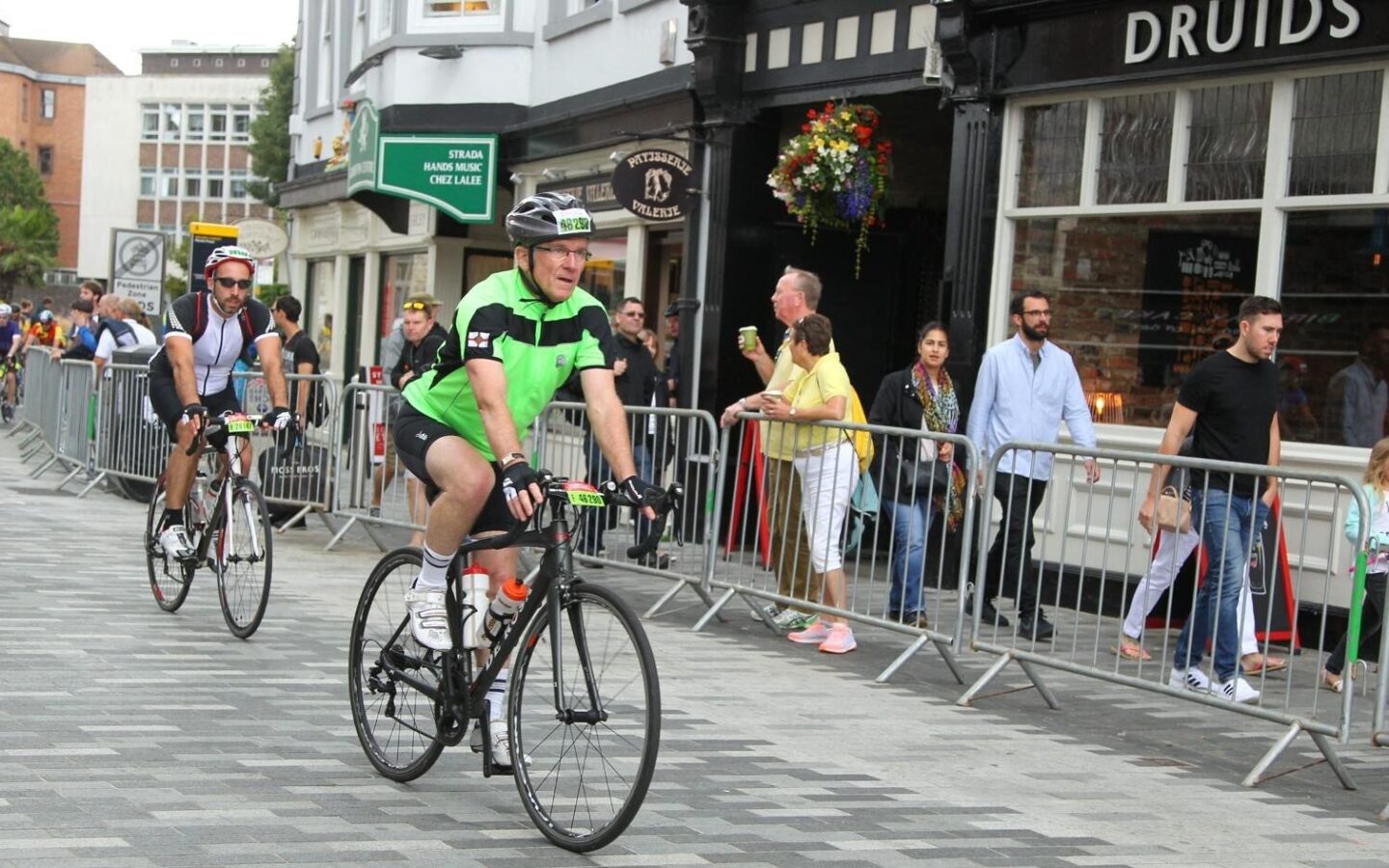
BLOG: Chair takes on gruelling 205-mile cycle challenge to raise funds for member charity

How on earth did I get here? It’s a question I’ve been asking myself regularly.
Ah yes, now I remember. The lovely (and very persuasive) CEO of the Sailors’ Children’s Society, Natasha Barley, made a second attempt at signing me up for their Bridge to Bridge ride. I declined last year, but this time I weakened.
On reflection, although it still felt like a daunting challenge, I thought: “What’s an eight-year break at my age?” I’m 68, after all.
I haven’t cycled 100 miles since the London 100 in 2018. In fact, I haven’t ridden a single mile on my road bike since then. So, in April, I got back in the saddle and started training. January, February and March were so wet that they provided the perfect excuse not to begin any earlier.
The first challenge was retraining my muscle memory to unclip my cycling shoes from the pedals before falling over. So far, so nearly good. I managed to fall off while mounting the bike in the lane outside my house. Thankfully, it was early on a Sunday morning and nobody saw!
My training plan was fairly simple: rides of around 25, 50, 75 and then 90 miles, building up gradually. Once I’d completed a few 90-mile rides, the next step would be adding a second ride the following day, something I’ve never done before. Having a plan meant I felt obliged to stick to it.
As I mentioned, I have ridden 100 miles before. I completed the London 100 in 2016, 2017 and 2018 in support of Seafarers UK, so I knew that with enough training I could manage the distance again. However, the prospect of riding another 100 miles the day after completing the first still feels rather daunting.
Three months into my training programme, I’m pleased to say I’ve completed my first 90-mile ride. The first 75 miles felt relatively comfortable, although my legs were certainly feeling it during the final stretch through the Chiltern Hills.
One thing I’ve learned from the gradual build-up is that each long ride becomes a little easier than the last. Just as importantly, my recovery time is improving. After my first 25-mile ride, I was completely wiped out for the rest of the day. Now, after a shower, some lunch and a couple of hours’ rest, I’m able to get on with jobs around the house and garden.
I’m hoping that after a few more 90-mile rides, preferably not during a heatwave, I’ll be ready to ride again the following day. I don’t think I need to complete two back-to-back century rides in training, but a 90-mile ride followed by a 40 or 50-mile ride should be enough preparation for the Bridge to Bridge challenge: 105 miles on day one and 100 miles on day two.
When I started training, my biggest concern was traffic. Not only has traffic density increased since 2018, but it often feels as though driving standards have declined too. Double trouble.
Thankfully, my fears have largely been unfounded. Apart from one alarming moment when a car indicated left at a roundabout before driving straight on, most drivers have been considerate. The lorry drivers, without exception, have been brilliant.
My greatest concern remains the state of the roads. Potholes are a nuisance when driving, but on a bike they’re an entirely different matter. Avoiding them requires constant concentration and a decent-sized pothole could easily bring both cyclist and bike to grief.
Despite the aches, the occasional wobble, and my ongoing battle with potholes, training is going well. There’s still plenty of work to do before the start line, but each ride brings me a little closer to being ready for the challenge ahead.
And if Natasha asks me to do it again next year? Well, let’s not get carried away…
How will your support help SCS?
- £28 covers an hour of support with one of our Family Support Officers who provide emotional and practical support to seafaring families who have lost a loved one, have been diagnosed with an illness that is terminal or chronic like PTSD, or have experienced family breakdown.
- £65 covers the cost of a winter coat, winter shoes and a hat and gloves keeping a child warm through the winter
- £150 pays for a child’s school uniform for the year ensuring they can fit in with their peers and have new uniform that fits them
- £500 covers that cost of a family having a respite break helping them heal from the trauma they have experienced